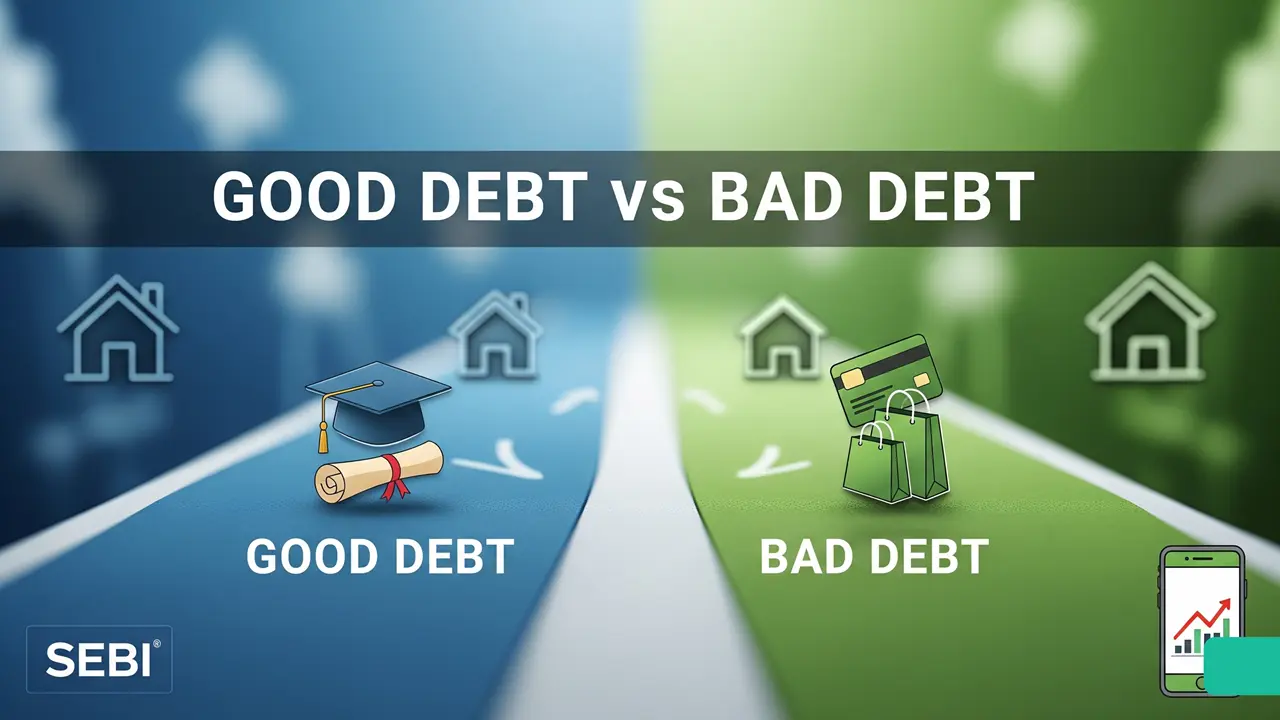
Debt isn’t always a villain—sometimes it’s a tool to build wealth, but other times it’s a trap that drains your wallet. In India, with EMIs, credit cards, and loans aplenty, understanding good debt versus bad debt is crucial. Good debt fuels growth; bad debt drags you down. This guide breaks down the differences with practical tips to manage both. Ready to decode debt? Let’s get started!
What is Debt?
Debt is money borrowed from a lender, like a bank or friend, to be repaid with interest. It’s common in India for homes, education, or lifestyle expenses. Priya, a Mumbai teacher, took a home loan to buy a flat. Debt can be productive or destructive, depending on its purpose and terms. Knowing the difference helps you make smart financial choices.
What is Good Debt?
Good debt is borrowed money that creates long-term value or wealth. It’s an investment in your future, like a home loan for property that appreciates or an education loan for a high-paying career. Ankit, a Delhi engineer, used a student loan to fund his MBA, boosting his earning potential. Good debt typically has lower interest rates and manageable repayment terms.
What is Bad Debt?
Bad debt funds non-essential or depreciating assets, often with high interest. Credit card dues for lavish spending or personal loans for vacations are examples. Neha, a Bengaluru freelancer, racked up ₹50,000 in credit card debt for shopping, struggling with steep interest. Bad debt often has high costs and no financial return, making repayment a burden.
Key Difference: Purpose
Good debt serves a productive purpose, like buying a home or funding education, which increases your net worth or income. Rohan’s home loan helped him own a Chennai property that gained value. Bad debt covers wants, like gadgets or dining out, offering no long-term benefit. Shalini’s ₹20,000 personal loan for a luxury phone added no value, only stress.
Interest Rates
Good debt usually has lower interest rates. Home loans or education loans from RBI-regulated banks charge moderate rates, making repayment easier. Meera’s home loan EMI fits her Kolkata budget. Bad debt, like credit cards, carries high interest, often doubling the debt if unpaid. Ravi’s unpaid credit card bill ballooned due to steep rates, draining his savings.
Repayment Terms
Good debt offers longer, flexible repayment periods. Home loans can span decades, keeping EMIs affordable. Ankit’s 20-year home loan has manageable payments. Bad debt, like personal loans or credit card dues, often demands quick repayment with high EMIs or penalties. Neha faced hefty penalties for missing credit card payments, complicating her finances.
Impact on Financial Goals
Good debt aligns with goals like homeownership or career growth. Priya’s education loan led to a better job, funding her retirement savings. Bad debt derails goals by eating into income. Rohan’s credit card debt for travel delayed his emergency fund. Good debt builds wealth; bad debt forces you to sacrifice savings or investments for repayments.
Risk Level
Good debt carries lower risk when tied to appreciating assets or stable income potential. Meera’s home loan is low-risk as her property grows in value. Bad debt is riskier, often tied to depreciating items like cars or gadgets. Shalini’s car loan lost value as the car depreciated, leaving her with high EMIs and no asset growth.
Examples of Good Debt
Home loans from RBI-regulated banks build equity as property values rise. Education loans fund degrees that boost earnings. Business loans for entrepreneurs like Ankit, who expanded his startup, create income streams. These debts, when managed well, enhance financial stability. Research terms on financial websites to ensure affordability and alignment with your goals.
Examples of Bad Debt
Credit card debt for non-essentials, like Neha’s shopping sprees, is a classic bad debt due to high interest. Personal loans for vacations or luxury items offer no returns. Payday loans with exorbitant rates trap borrowers. Ravi’s loan for a fancy watch left him with hefty EMIs. Avoid these to protect your savings and financial health.
Managing Good Debt
Choose good debt wisely—compare interest rates and terms from RBI-regulated banks. Ankit researched home loans on financial websites, picking a low-rate option. Budget for EMIs using the 50/30/20 rule, ensuring they fit your income. Prepay when possible to reduce interest. Good debt, managed well, supports goals like homeownership or education without overwhelming your finances.
Managing Bad Debt
Pay off high-interest bad debt first, like credit cards, using the debt avalanche method. Neha cleared her ₹30,000 credit card debt before her low-rate education loan. Cut non-essential spending to free up funds. Negotiate with lenders for lower rates. Use financial apps to track payments and avoid penalties, ensuring bad debt doesn’t derail your financial plans.
Avoiding Bad Debt
Live within your means—use cash for wants instead of credit cards. Shalini stopped swiping her card for dining, saving ₹5,000 monthly. Build an emergency fund in an RBI-regulated savings account to avoid loans for crises. Research purchases and wait 24 hours before buying non-essentials. Financial discipline prevents bad debt from creeping into your life.
Investing After Debt Management
Once bad debt is cleared, redirect funds to SEBI-regulated mutual fund SIPs or RBI-regulated fixed deposits. Ravi’s ₹3,000 monthly debt repayment now funds an equity SIP. Use Section 80C options like PPF or ELSS for tax savings. Research investments on financial websites to match your risk tolerance, building wealth post-debt.
Benefits of Understanding Debt Types
Knowing good versus bad debt helps you borrow smartly, avoiding financial traps. Good debt boosts wealth; bad debt saps it. Meera’s home loan built equity, while Ankit’s credit card debt drained savings. This knowledge promotes disciplined borrowing, enhances savings, and supports investments in SEBI or RBI-regulated options, securing your financial future in India.
Challenges to Managing Debt
High living costs or irregular income can complicate debt repayment. Neha struggled with EMIs on her freelance income. Budget tightly, cut wants, or explore side hustles to boost funds. Financial apps help track expenses. Bad debt’s high interest can feel overwhelming, but prioritizing repayments and negotiating terms with lenders make it manageable.
Tips for Smart Debt Management
Borrow only for appreciating assets or income-boosting goals. Use financial apps to track EMIs and spending. Build an emergency fund to avoid bad debt. Priya’s ₹50,000 fund saved her from a loan during a medical crisis. Compare loan terms on financial websites. Consult a SEBI-registered advisor to align borrowing and investments with your financial plan.
Common Mistakes to Avoid
Don’t take loans for non-essentials—Rohan’s vacation loan cost him ₹20,000 in interest. Avoid paying only minimums on credit cards; it prolongs debt. Don’t ignore bad debt; it grows fast. Skip unregulated lenders offering quick loans; Shalini lost ₹15,000 to a scam. Use SEBI or RBI-regulated platforms and budget wisely to manage debt effectively.
Conclusion
Good debt builds wealth through assets or education; bad debt funds fleeting wants, costing you more. Assess loans, prioritize high-interest repayments, and avoid unnecessary borrowing. Use SEBI and RBI-regulated options to save and invest post-debt. Ready to master debt? Share your plan in the comments and take control of your financial future in India!
Frequently Asked Questions (FAQ)
What is good debt?
It’s borrowing for assets or goals that increase wealth, like home or education loans.
What is bad debt?
It’s high-interest borrowing for non-essentials, like credit cards for shopping or vacations.
How do I manage bad debt?
Pay high-interest debts first, cut spending, and use financial apps to track repayments.
Can good debt become bad?
Yes, if mismanaged—like taking a home loan beyond your repayment capacity.
Where should I invest after clearing debt?
Use SEBI-regulated mutual funds or RBI-regulated FDs for safe, long-term growth.